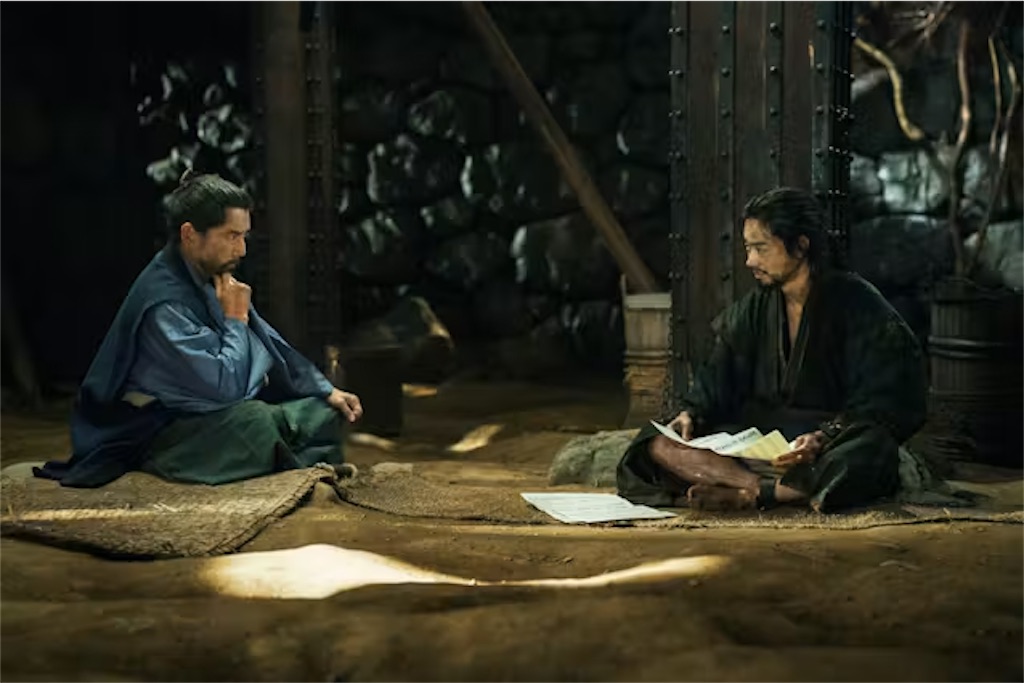
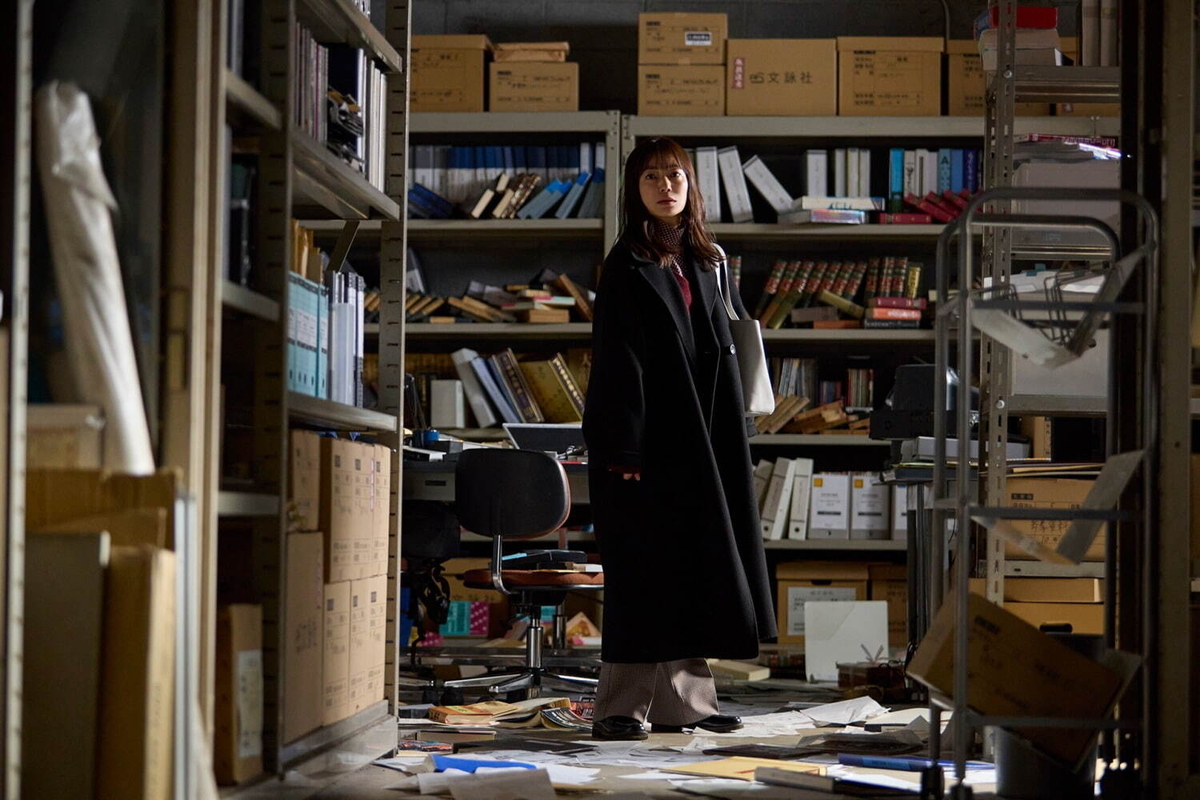
回路の記事をnoteに載せました
note.com
Analysis of Kiyoshi Kurosawa’s Journey to the Shore (2015): The Atomic Theory of Cinema and the Rhythm of the Void
Abstract
This analysis reposition’s Kiyoshi Kurosawa’s Journey to the Shore not merely as a supernatural melodrama, but as a profound exploration of Cinematic Atomism. By interpreting the protagonist Yusuke’s lecture on the universe as a meta-commentary on the medium of film, the author argues that the "tide" in the movie represents the microscopic oscillation between "existence" and "nothingness" (the void between cuts). This critique elevates the film to a cosmic scale, where the boundaries between life and death are governed by the same physical laws as light and waves.
Key Analytical Pillars
1. The "Shoreline" as a Liminal Fluctuation
The journey of Mizuki and the deceased Yusuke is synchronized with the lunar cycle and the ebb and flow of the tide. They exist only on the "Shoreline"—the volatile boundary between the living (Utsushiyo) and the dead (Tokoyo). Their inability to remain in one place stems from the nature of this boundary: it is a shifting line that only exists through constant change.
2. The "Wave" as the Mechanism of Disappearance
The author identifies a revolutionary use of the "cut" in Kurosawa’s editing. When a deceased character vanishes, the transition is mediated by a metaphorical "Wave."
Wave-Particle Duality: Much like small fragments washed away on a beach, the dead appear and disappear according to the rhythm of these "Waves" (cinematic cuts).
The Fear of Erasure: Mizuki’s panic when a distant island vanishes reflects the existential dread that the same "Wave" that swallowed the landscape has also reclaimed Yusuke.
3. The Atomic Theory of Cinema: "Light, Waves, and Nothingness"
In the pivotal scene where Yusuke teaches a class, the analysis suggests he is explaining the very fabric of the filmic world.
The Atom of Film: Film is composed of massless photons (light) that fluctuate in waves. Yusuke’s statement that "the world is made of nothingness" refers to the atomic level of cinema—the literal void that exists between frames and cuts.
The Intersection of Cuts: The "Wave" that Yusuke describes (narrowed down until it becomes nothing) is the "cut" itself. Cinema is a collection of these "nothings" (voids) that, when gathered, create the illusion of a world.
4. Performance as an Anchor: The Fictional vs. The Real
The film balances two contrasting acting styles to navigate this "cosmic" scale.
Tadanobu Asano: Provides a "physical persuasion" that feels grounded in reality, making the presence of a ghost undeniable.
Eri Fukatsu: Represents a "purified fiction." Her stylized performance and the film’s theme music act as a crucial anchor, preventing the audience from being overwhelmed by the harrowing nature of loss and instead guiding them toward a "forward-looking mourning."
Conclusion: A Cosmic Affirmation
Journey to the Shore is a monumental work that demonstrates how cinema—though a world of different physical laws—is still governed by the logic of the universe. By acknowledging the "Dark Matter" or "Dark Energy" of film (the unknown forces that move and expand the medium), Kurosawa offers a message of hope. The film is an affirmation of the connection between our world and the "other side," unified under the grand architecture of light and waves.
stevenspielberg.hatenablog.com
Analysis of Kiyoshi Kurosawa’s Wife of a Spy (2020): The Transparency of the "Spy" and the Spectator’s Resistance
Abstract
This analysis deconstructs Wife of a Spy not merely as a historical thriller, but as a meta-cinematic treatise on the act of "seeing" and "being seen." The author argues that the protagonist Satoko represents the Embodied Spectator, whose cognition dictates the film’s reality. By situating the "Spy" as a transparent identity inherent to all cinematic acting, the essay explores how filmic "editing" (conducted by the husband, Yusaku) serves as a mechanism to avert historical tragedy and personal erasure.
Key Analytical Pillars
1. The Transparency of the "Spy" and Meta-Performance
The classical, theatrical acting style of the leads emphasizes that they are "performing" within the world. Drawing parallels to Robert Zemeckis's Allied (2016), the author posits that the "Spy"—one who plays a role to change the world—is a metaphor for the cinematic medium itself. In this sense, Satoko is not just a spy’s wife; she becomes a "Spy" (a cinematic subject) the moment she enters the frame of the narrative.
2. Satoko as the "Spectator" within the Frame
The film aligns Satoko’s perspective with the audience's.
Subjective Reality: Guards appear only after their existence is mentioned; a song from her past plays in a room without a record player. Her cognition influences the filmic world.
The Camera Obscura: Satoko is found hiding in a wooden box with a peephole—a literal camera obscura. This reinforces her role as the spectator who is plunged into the "darkness" of the 1940s, a world where her agency is suppressed.
3. Yusaku as the "Architect of Cinema"
If Satoko is the spectator, Yusaku is the Director/Editor.
Editing Fate: By swapping the evidence of the 731 Unit’s atrocities with his amateur film, Yusaku "edits" Satoko’s reality. He forces the filmic "drama" (the death of the woman in red) to occur within the movie-within-the-movie, thereby saving the real Satoko from her scripted demise.
Dissolving into the Screen: His final appearance—fading into the screen—positions him as an entity synonymous with the cinematic concept itself.
4. The Terror of Being Unseen: Historical and Existential Trauma
The analysis connects Satoko’s final despair on the beach to Kurosawa’s earlier work, Retribution (Kyōbu, 2006).
The "Woman in Red" Archetype: Satoko’s fear is not of death, but of being "unseen" or "forgotten" by the world.
The Continuity of Disaster: The screams of the air raids overlap with the trauma of the 1995 and 2011 disasters, visualizing the "invisible catastrophe" faced by women throughout history. Satoko’s frantic run along the shoreline is a desperate struggle against being erased back into the "blind spot" (the sea/the dark theater).
Conclusion: Validation of Existence through the Gaze
The film concludes that Satoko existed because "we," the audience, watched her. Despite the camera eventually turning away from her prostrate form, the closing text confirms her survival, asserting that the act of witnessing—cinema itself—is a testament to the existence of those whom history seeks to forget.
Analysis of Kiyoshi Kurosawa’s LOFT (2005): The Cinema Screen as a Half-Mirror and the Rupture of Aestheticized Death
Abstract
This analysis explores Kiyoshi Kurosawa's LOFT not as a conventional ghost story, but as a meta-cinematic investigation into the "Screen" as a physical and ontological boundary. By equating the water’s surface with the cinema screen, the author argues that the film’s supernatural elements are actually mirror reflections (mirror images) rather than ghosts. The narrative deconstructs the male gaze's obsession with the "beautiful mummy" (conceptualized death), eventually shattering this illusion through the reality of the biological corpse.
Key Analytical Pillars
1. Temporal Dissonance and the "Reverse-Playback" Logic
The author identifies a profound structural "strangeness" in the transition to flashbacks. Rather than following standard Hollywood editing (e.g., overlapping breath or direct dissolves), Kurosawa inserts a redundant shot of the protagonist, Yoshioka, entering a car before the flashback occurs. This suggests a disruption in linear causality, hinting that the film might operate on a "future-to-past" temporal flow or a logic designed for reverse playback.
2. The Screen as a "Half-Mirror" Interface
Drawing on architectural theory and Kurosawa’s own cinematic philosophy, the analysis identifies the pulley system over the swamp as a literal "Screen."
The Water-Screen Equation: In Kurosawa’s world, the screen functions like water or a half-mirror. It is transparent (showing the "other side") yet reflective (acting as a mirror to "this side").
Submerged Perspective: The film implies that the audience is looking at the world from "underwater," where life and death become indistinguishable through visual perception alone.
3. The Mummy vs. The Corpse: A Schrödingerian Death
The film portrays the "mummy" as an aestheticized object—a "beautiful death" that fascinates the male characters.
The Illusion: As long as the entity remains on the other side of the screen/water, it exists in a state of superposition (like Schrödinger’s Cat), neither fully dead nor alive.
The Rupture: The finale, where a bloated, realistic corpse is pulled from the water, serves as a "cold shower" to the men intoxicated by the conceptual beauty of the mummy. The passage through the screen forces the "object" to transform from an aesthetic ideal into a grim biological reality.
4. The "Ghost" as a Corroding Mirror Image
The author proposes a radical theory regarding the "Woman in Black": she is not a ghost, but a mirror image of someone existing in the "blind spot" (the real world/the theater).
Mirror Corrosion: The woman’s slow, speckled disappearance mimics the "silvering" or corrosion (black spots) of an old mirror.
The Spectator in Black: Just as Kurosawa depicted theater audiences as "black ghosts" in Pulse (Kairo), the woman in black represents the presence of the "observer" reflected onto the screen's surface.
Conclusion: The Ontological Function of the Screen
LOFT serves as a treatise on the function of the cinema screen itself. It is a boundary that ambivalently holds life and death in suspension. Through the metaphors of the "Wigner’s Friend" thought experiment and mirror degradation, Kurosawa reveals that what we perceive as the "supernatural" is often just our own reflection, transformed and distorted by the medium of film.
stevenspielberg.hatenablog.com
Analysis of Kiyoshi Kurosawa’s Bright Future (2003): The Revolution of the Dreaming Subject
Abstract
This analysis challenges the conventional interpretation of Kiyoshi Kurosawa's Bright Future as a standard "coming-of-age" or "moratorium" film. Instead, it posits the work as a radical "Revolution of Sleep." By identifying the true "dreaming subject" of the film not as the protagonist Yuji, but as the comatose girl (the daughter of the Fujiwara family), the author reinterprets the spreading "red jellyfish" as a metaphor for the proliferation of "unproductive" states that sabotage the 24/7 logic of global capitalism.
Key Analytical Pillars
1. The Jellyfish as a Subversive Vector
The red jellyfish (Aka-kurage) is not merely a symbol of youthful rebellion. While Mamoru (Tadanobu Asano) sought to "acclimatize" it to fresh water, its release into the urban underground and subsequent return to the sea signifies the transmission of a disruptive force. The jellyfish represents a form of "asocial" existence that, through its sting and subsequent coma-inducing effect, halts the productive flow of society.
2. The Meta-Cinematic Dream Theory
The film’s opening monologue about "dreams of the future" and the intentional "meta" ending (where the filming crew is visible and the screen turns white) suggest that the entire narrative is a dream.
The "Go" vs. "Wait" Command: Mamoru’s signals are reinterpreted here: "Wait" refers to the state of dreaming, while "Go" signals the moment of awakening.
The Subjectivity Swap: The analysis argues that the "Subject" dreaming this world is the girl reported to be in a coma. Evidence lies in the camera-eye contact during the break-in scene, suggesting Yuji is being watched by a higher-order consciousness—the dreamer herself.
3. The Concealed Crime: "The Storm"
The "storm" Mamoru predicted was not his own crime, but the girl’s murder of her parents. Mamoru’s arrest was a pre-emptive act to "release" her, taking the fall for her violence. The girl, hidden in the shadows and later seen running away in white, represents the "red" core of the jellyfish—a latent, explosive resistance against the domestic and social order.
4. Philosophical Context: Sabotaging the "24/7" Capitalist Engine
Drawing on Jonathan Crary’s 24/7: Late Capitalism and the Ends of Sleep, the analysis situates the girl’s coma (sleep) as the ultimate site of resistance.
Sleep as Sabotage: In a world demanding constant production and consumption, the act of "unproductive" sleep is a "dangerous place" and an "inconvenient exception."
The Jellyfish as Contagion: The spreading jellyfish represent the contagion of this non-productive, dreaming state.
Conclusion: A Bright Future of Resistance
Bright Future is not about a young man finding his place in society. It is a story of a revolution through "dreaming." By spreading the "inconvenient" state of sleep/coma through the metaphor of the jellyfish, the film depicts the expansion of spaces that cannot be colonized by capital. The "Bright Future" lies in the awakening of the subject, only to dream again, perpetually obstructing the machinery of the modern world.
stevenspielberg.hatenablog.com
Pulse (Kairo): A Structural Analysis of Optical Apparatus and the Boundary of Death
Abstract
This analysis provides a radical reinterpretation of Kiyoshi Kurosawa's Pulse (Kairo, 2001), shifting the focus from a typical ghost story to an exploration of optical media. By identifying "lattice patterns" as the grid of a Camera Obscura and the "forbidden rooms" as the origin of the image, the author argues that the film portrays the internet not as a communication tool, but as an optical apparatus mediated by the half-mirror effect.
Key Terms
Camera Obscura (暗い部屋): The primordial "dark room" that creates an image through a pinhole.
Half-Mirror Effect (ハーフミラー効果): The optical phenomenon where the boundary between two spaces becomes either a mirror or a window depending on light intensity.
Pepper's Ghost (ペッパーズ・ゴースト): A visual trick using glass and light to manifest "ghosts" in a physical space.
Structural Translation (Core Analysis)
1. The Lattice Pattern and the Half-Mirror Effect
Throughout the film, lattice patterns (checkerboards/chessboards) appear in crucial scenes. These function as a structural grid for the "gaze." The inexplicable visual phenomena in Pulse—such as a man appearing and disappearing or mirror-writing on a wall—can be explained through the "Pepper's Ghost" technique. This suggests that the cinematic space itself is constructed through a series of half-mirrors, where the boundary between "this side" and "the other side" is determined solely by the balance of light.
2. The Internet as an Optical Apparatus
The internet in Pulse is depicted as a system that operates even without physical cables (as seen with the disconnected LAN outlet). This implies that "the network" is not a digital connection, but a directional gaze mediated by frames, glass, and light. The monitor is not a display of data, but an optical instrument—an evolution of the Camera Obscura—that facilitates the observation of the dead.
3. The Origin: The Destruction of the Primordial "Dark Room"
The "Forbidden Room" (Akazu-no-ma) sealed with red tape represents the Camera Obscura in its purest form. When these rooms are destroyed or opened, the "circuit" (Kairo) is activated. In this film, a circuit is not something that functions by being closed, but something that operates by being opened. The primordial image, once contained within the dark room, is now unleashed into the world through every available frame and glass surface.
4. Death as a Translucent Boundary
Death in Pulse is not a separate realm, but a boundary that exists within this world. This boundary acts like a half-mirror:
For the Living: Death is an indirect perception, a dark reflection.
For the Dead: They reside in the "darkness" of the Camera Obscura, observing the living through the translucent glass.
As the "circuit" opens, the balance of light shifts. The living become shadows (shadow-like stains), and the dead manifest as clear realities. The final monologue suggests that "seeing together"—sharing the same gaze—is the only way to escape the total self-extinction caused by this optical solitude.
5. Conclusion
Kiyoshi Kurosawa’s Pulse illustrates a world where the apparatus of seeing has fundamentally broken. We are all trapped within a global Camera Obscura, where the "inter-net" is merely a collection of gazes fixed upon the void. By the end, the audience realizes they, too, are within a "Forbidden Room," looking out through the frame of the screen.
stevenspielberg.hatenablog.com
The Übermensch in the Loop: An Ontological Analysis of Kiyoshi Kurosawa’s CURE
Abstract
This analysis deconstructs Kiyoshi Kurosawa's CURE (1997) not merely as a social thriller, but as an ontological cinematic experiment. By identifying the "X-shaped" incision as a subliminal image of the protagonist's wife (Fumie) shared across a collective unconscious, the author argues that the protagonist, Takabe, eventually transcends nihilism to become Nietzsche’s Übermensch (Overman), perceiving the cinematic medium itself as the Eternal Recurrence.
Key Terms
Eternal Recurrence (永劫回帰): The cinematic loop where the end and beginning are indistinguishable.
Übermensch (超人): The state Takabe achieves by embracing the repetitive nature of his existence.
Subliminal Core (核となるイメージ): The visual of Fumie’s corpse that precedes the chronological events.
Structural Translation (Core Analysis)
1. The Paradox of the "X-mark" Origin
The mystery of where the distinctive "X-cut" method originated—a question posed by Takabe himself—remains unanswered in conventional critiques. However, the film provides a visual answer through subliminal shots of Takabe’s wife, Fumie, already dead with an X-shaped wound. This image functions as a "Subliminal Core" that exists outside of linear time, shared by the perpetrators as a latent visual command.
2. Cinema as the "Eternal Recurrence"
If we view the cinematic medium as a physical loop of film, the distinction between past and future vanishes. Mamiya’s command to "Remember" is not an appeal to personal history, but an awakening to the fact that they are characters trapped within a repeating film. The "memories" they recall are the film itself.
3. Takabe’s Transformation into the Übermensch
In the finale, Takabe does not simply become a successor to Mamiya. Instead, he achieves a realization akin to Nietzsche’s Übermensch.
"Was THAT life? Well then! Once more!"
By embracing the circularity of the murders—beginning with a killing and ending with the implication of another—Takabe overcomes nihilism. He accepts the "Eternal Recurrence" of the cinematic frame and transforms into a being that acts with total volition within this loop.
4. Conclusion: Beyond the Genre
CURE is a journey where a protagonist, plagued by social pathology, falls into nihilism, only to reach the "end of the world" where he awakens as an Übermensch. Through this, Kurosawa achieves a radical exploration of the inherent nature of cinema—a medium where every moment is a repetitive, eternal present.
stevenspielberg.hatenablog.com